




 beidouglobe@outlook.com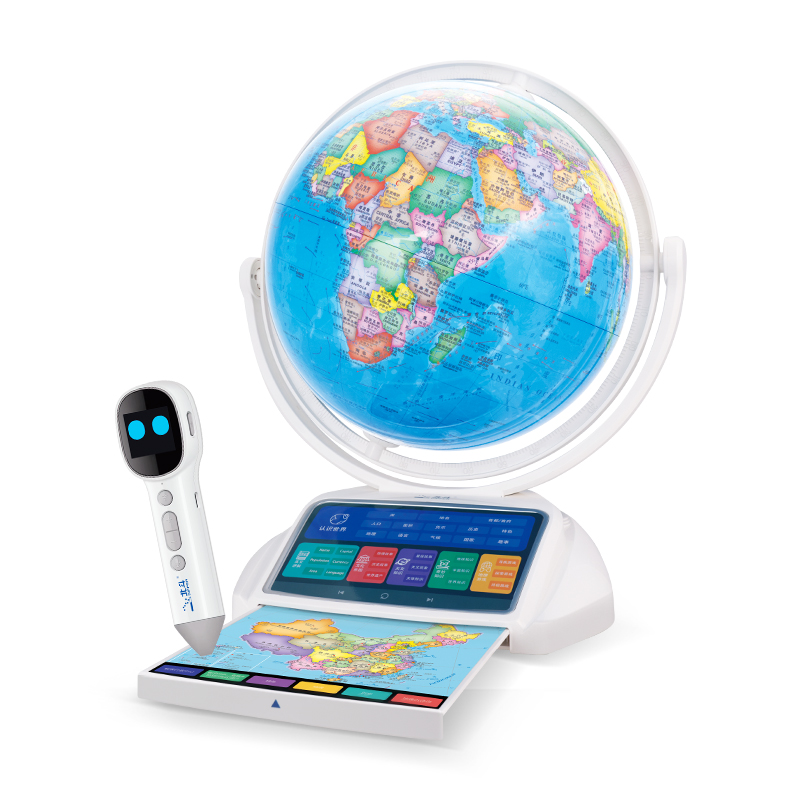




How AR Technology Enhances Children's Spatial Cognition
Spatial cognition—the ability to understand and interact with the spatial relationships between objects, places, and oneself
—is a critical skill for children’s academic growth and daily life. From reading maps to solving math problems, this skill lays
the foundation for learning across subjects. Today, Augmented Reality (AR) technology is revolutionizing how kids develop spatial
cognition, turning abstract concepts into tangible, interactive experiences. Below, we explore how AR transforms spatial learning for children.
1. Bridges Abstract and Concrete Concepts
Traditional spatial learning often relies on 2D materials like textbooks or flat maps, which force children to visualize 3D relationships mentally
—a challenging task for young minds. AR technology overlays virtual 3D models onto the real world, allowing kids to “see” and manipulate
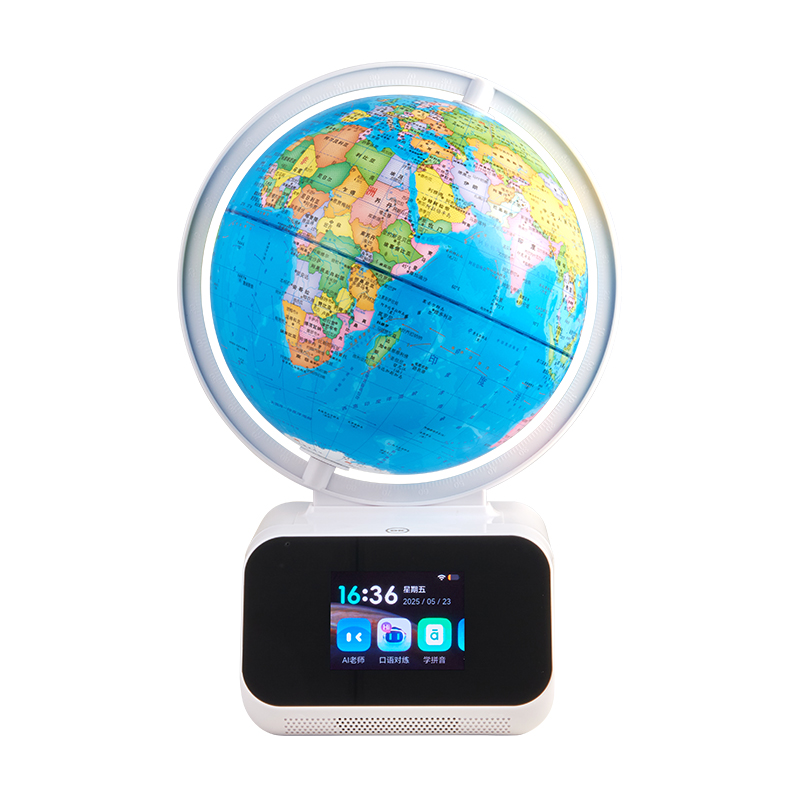
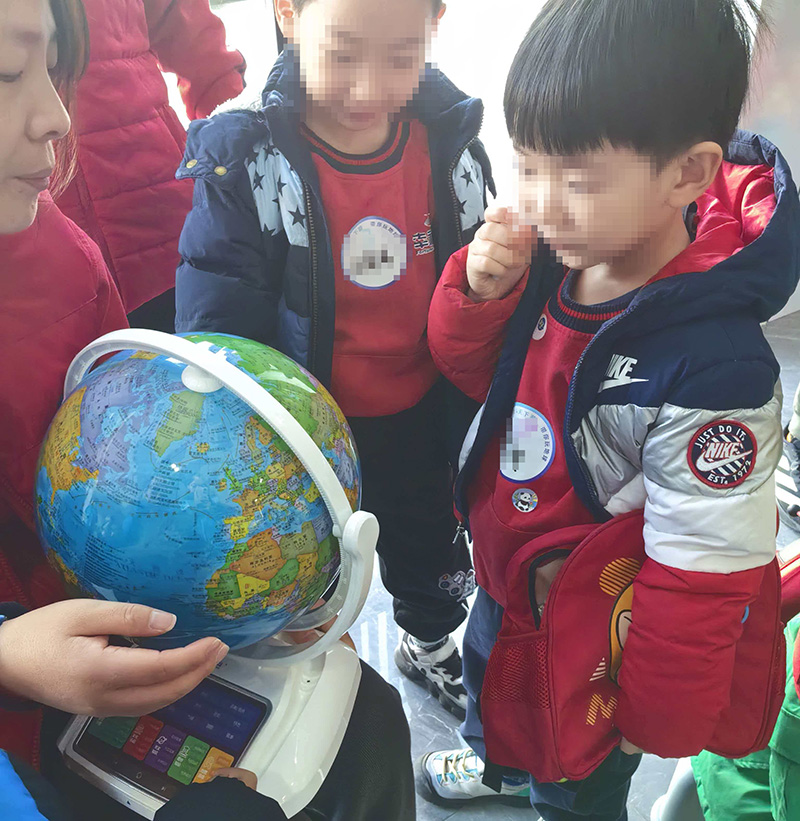
spatial concepts directly. For example, an AR globe projects 3D landforms, oceans, and continents, letting children rotate, zoom in, and explore
how mountains connect to valleys or how equator divides the globe. This hands-on interaction turns abstract ideas like “latitude and longitude”
into tangible knowledge, making it easier for children to grasp spatial logic.
2. Promotes Active Exploration and Experiential Learning
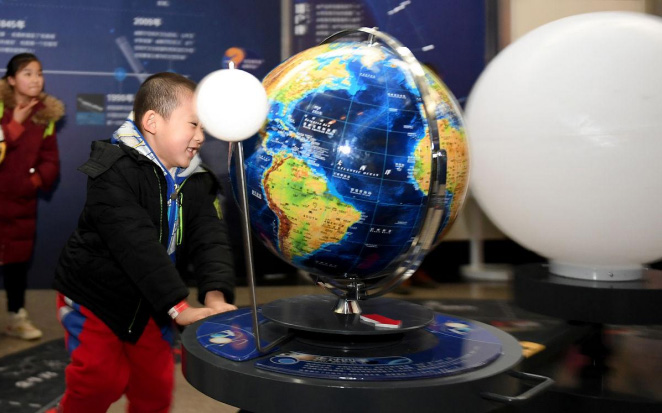
Spatial cognition thrives through active engagement, not passive observation. AR technology encourages children to explore independently:
they can “walk” through virtual cities, navigate simulated landscapes, or rearrange virtual objects to test spatial relationships. For instance,
AR geography apps let kids plan a route across a continent, adjusting paths based on terrain or distance—all while understanding direction,
scale, and spatial layout. This experiential learning fosters curiosity and critical thinking, as children learn by doing rather than memorizing.
3. Enhances Spatial Visualization and Mental Rotation Skills
Spatial visualization—imagining how objects look from different angles—and mental rotation—rotating objects in one’s mind—are key
components of spatial cognition. AR activities train these skills by letting children interact with 3D objects in real time. For example,
an AR puzzle app might ask kids to rotate a virtual 3D shape to fit into a slot, or an AR building game could require them to visualize
how blocks stack to form a structure. As children manipulate these virtual objects, their ability to mentally represent and rotate spatial
forms improves, a skill that transfers to math, science, and engineering tasks.
4. Provides Multisensory Learning Experiences
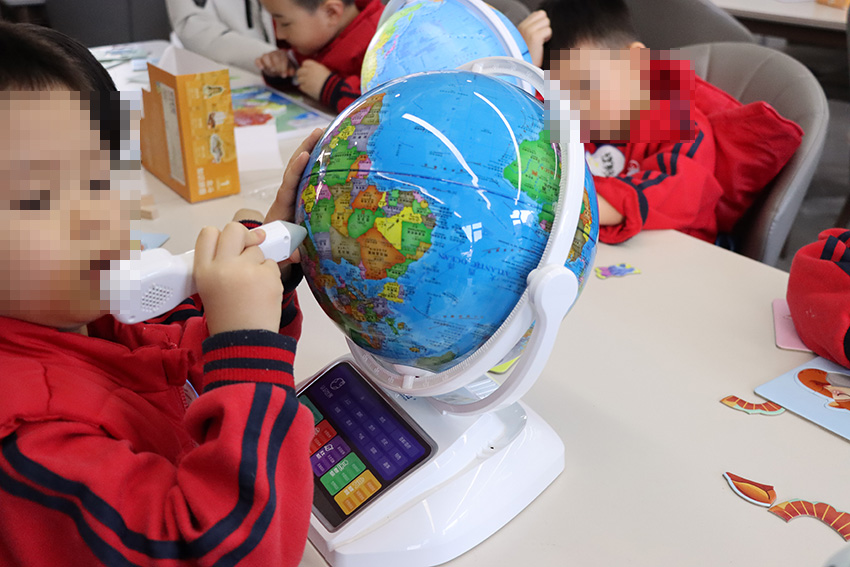
Spatial cognition is strengthened when multiple senses are engaged. AR technology integrates visual, auditory, and tactile feedback to create
immersive learning experiences. For example, an AR globe might play sounds of ocean waves when a child touches a sea, or highlight a country
with a flash of light while naming it aloud. Some AR tools even support haptic feedback, letting kids “feel” the texture of a mountain or the
smoothness of a desert. This multisensory engagement deepens memory and understanding, as children associate spatial information with sensory cues.
5. Supports Individualized and Adaptive Learning
Every child learns at a different pace, and AR technology adapts to individual needs. AR apps can adjust the difficulty of spatial tasks based on a child’s progress
—starting with simple activities like identifying directions and advancing to complex tasks like mapping routes or solving spatial puzzles. For children who
struggle with certain concepts, AR provides repeated practice in a low-pressure environment; for advanced learners, it offers challenging extensions to keep
them engaged. This personalized approach ensures that each child develops spatial cognition at their own rhythm, building confidence along the way.
Conclusion
AR technology is more than a “fun tool”—it’s a powerful educational resource that transforms how children develop spatial cognition. By bridging
abstract and concrete concepts, promoting active exploration, enhancing visualization skills, engaging multiple senses, and supporting personalized learning,
AR helps children build a strong foundation in spatial thinking. As technology continues to evolve, AR will play an increasingly vital role in preparing kids for
academic success and real-world problem-solving—proving that learning about space can be both educational and exciting.
Spatial cognition—the ability to understand and interact with the spatial relationships between objects, places, and oneself—is a critical skill for children’s
academic growth and daily life. From reading maps to solving math problems, this skill lays the foundation for learning across subjects. Today, Augmented
Reality (AR) technology is revolutionizing how kids develop spatial cognition, turning abstract concepts into tangible, interactive experiences. Below,
we explore how AR transforms spatial learning for children.